High up in the Indian Himalayas, tucked between Tibet and Ladakh, lies a rugged wonderland called Spiti Valley — the name itself means ‘The Middle Land’, signifying its position between India and Tibet. A cold desert mountain valley in Himachal Pradesh, Spiti is a paradise for travelers who crave raw landscapes, ancient monasteries, and a taste of life at the edge of civilization.
A Land Like No Other
Spiti is like stepping into another world — barren yet breathtaking, harsh yet deeply peaceful. Snow-capped peaks guard vast brown mountains, turquoise rivers cut through deep gorges, and remote villages cling to cliffs as if time forgot them.
This region stays cut off from the rest of the world for nearly six months due to heavy snow, which preserves its timeless charm. When the roads open in summer, explorers flock to experience its otherworldly beauty and unique culture.
Monasteries That Touch the Sky
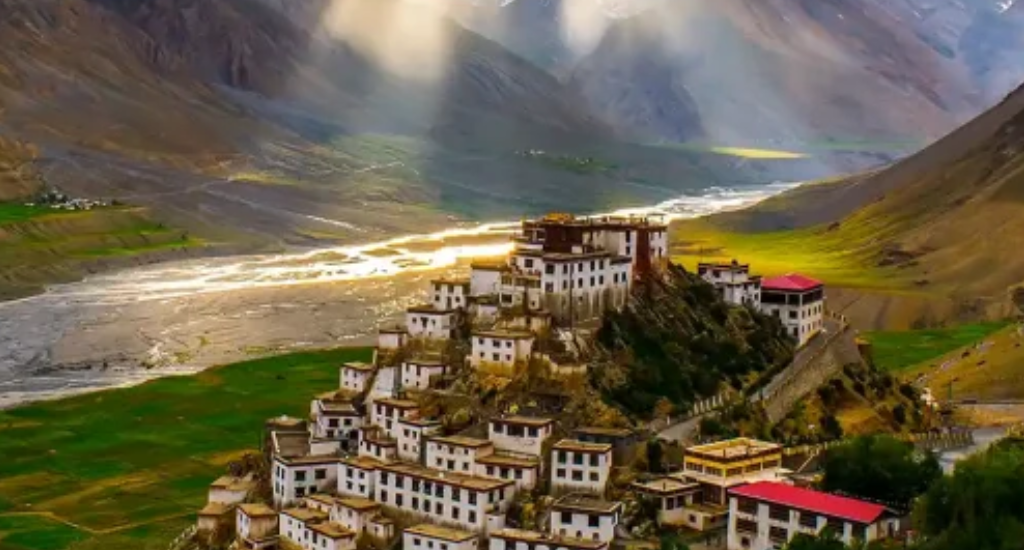
Spiti is home to some of the oldest and most beautiful Buddhist monasteries in India. Key Monastery, the largest in Spiti, sits dramatically atop a hill overlooking the Spiti River — a picture-perfect symbol of faith and resilience.
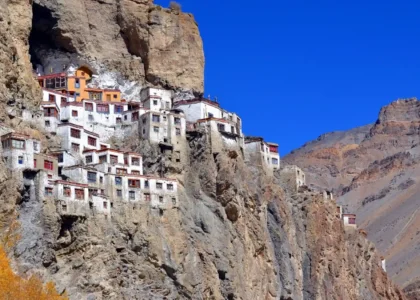
Dhankar Monastery, perched on a cliff, offers panoramic views that make you feel like you’re floating above the valley. Tabo Monastery, over 1,000 years old, is called the ‘Ajanta of the Himalayas’ for its ancient murals and scriptures.
Each monastery is not just a place of worship but a living museum of Tibetan Buddhist art, tradition, and monastic life.
Villages Frozen in Time
Life in Spiti’s remote villages like Kibber, Langza, Hikkim, and Komic (one of the world’s highest inhabited villages) is simple and hard yet heartwarming. Locals greet travelers with warm smiles and stories of survival in some of the harshest conditions on earth.
At Hikkim, you can even send a postcard from the world’s highest post office — a small joy that travelers love to check off their bucket list!
An Adventure Lover’s Playground
Spiti isn’t just about serene monasteries — it’s a playground for thrill-seekers too. The rough terrain is perfect for motorbiking, mountain biking, off-roading, high-altitude trekking, and camping under skies glittering with a million stars.
The roads to Spiti — whether you come from Manali or Shimla — are legendary among bikers and road trippers for their sharp hairpin bends, river crossings, and dramatic mountain passes like Kunzum La.
Best Time to Visit Spiti
- Summer (May–October): Best for road trips, camping, and exploring villages and monasteries when the roads are open and weather is pleasant.
- Winter (November–April): For the truly adventurous — Spiti transforms into a white wonderland. Visiting in winter is challenging but offers surreal snowy landscapes and a chance to spot the elusive snow leopard.
Travel Tips for Spiti
✅ Carry warm clothes — even in summer, nights can be freezing.
✅ Roads are rough — travel with an experienced driver or guide.
✅ Respect local customs and monastic rules.
✅ Go slow — high altitudes require proper acclimatization to avoid AMS (Acute Mountain Sickness).
✅ Leave only footprints — keep this fragile ecosystem clean and beautiful.
Walk the Spiti Dream with Himwalk
At Himwalk, we craft authentic Spiti Valley experiences — whether you’re a biker, trekker, photographer, or just a wanderer seeking peace in the mountains. From comfortable stays to local food, monastery visits, and hidden village stories, we make sure your journey is safe, soulful, and unforgettable.
Are you ready to ride through the rugged roads of Spiti Valley?
Come, let Himwalk guide you where the earth meets the sky.